
Vegan Stinging Nettle Pesto
Stinging nettles were made for pesto! Blended with olive oil, lemon juice, and walnuts, it tastes remarkably similar to traditional pesto. This recipe is easy, vegan, and created in a food processor.
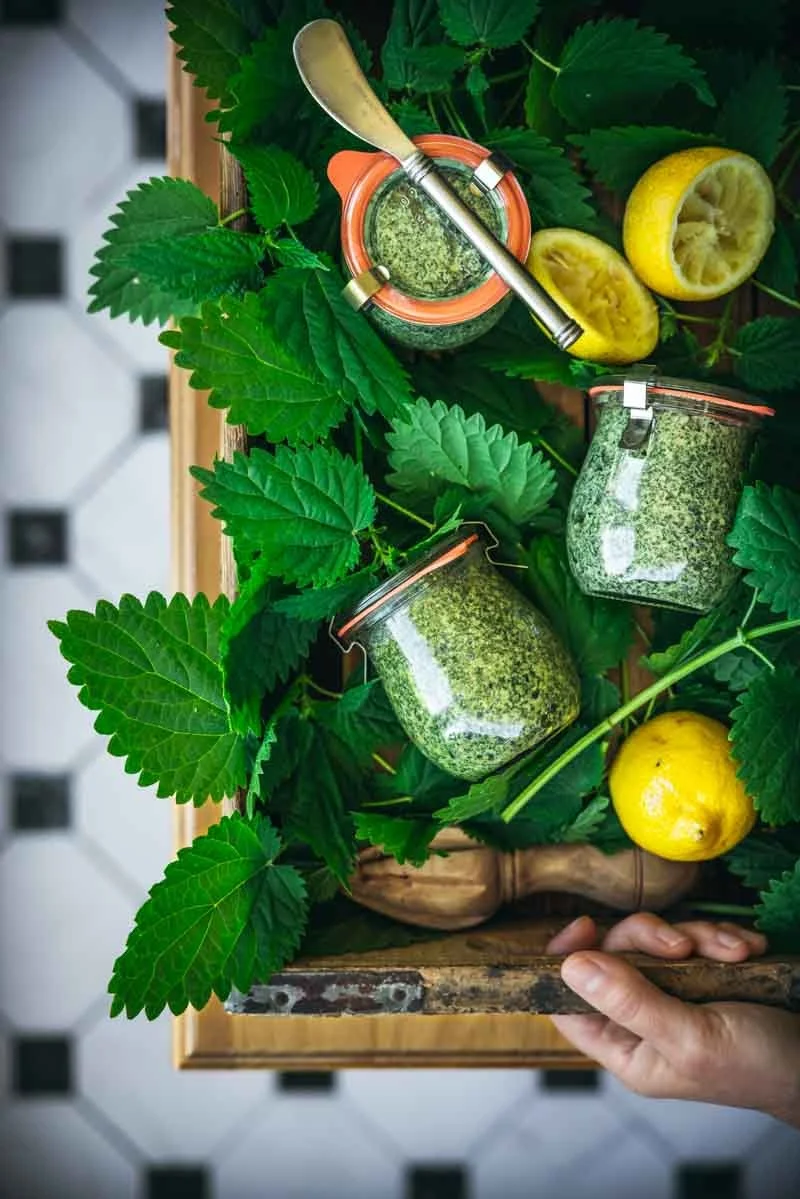
🌿 What Does Stinging Nettle Pesto Taste Like?
I’ve updated and simplified this recipe. It has all the flavor of the original recipe, uses fewer walnuts, more olive oil like classic pesto, and is conveniently made in a food processor.
If you’re new to stinging nettles, making pesto is the perfect place to start! Their earthy flavor pairs beautifully with olive oil, lemon juice, walnuts, and garlic. Vegan stinging nettle pesto tastes surprisingly close to traditional pesto but with more earthy notes - similar to spinach and parsley.
Once you discover the magic of making pesto out of foraged greens, you’ll start seeing delicious possibilities growing all around you!
⚠️ A Word of Caution
A word of caution: Do NOT eat stinging nettles raw. They will sting your skin and the inside of your mouth. The stingers must be deactivated before eating.
Before making this recipe, please read the safety tips on how to prepare stinging nettles for eating in THIS BLOG POST.
🔖 Ingredients You’ll Need
You’ll find the complete ingredient list with measurements and instructions in the recipe card at the bottom of this post.
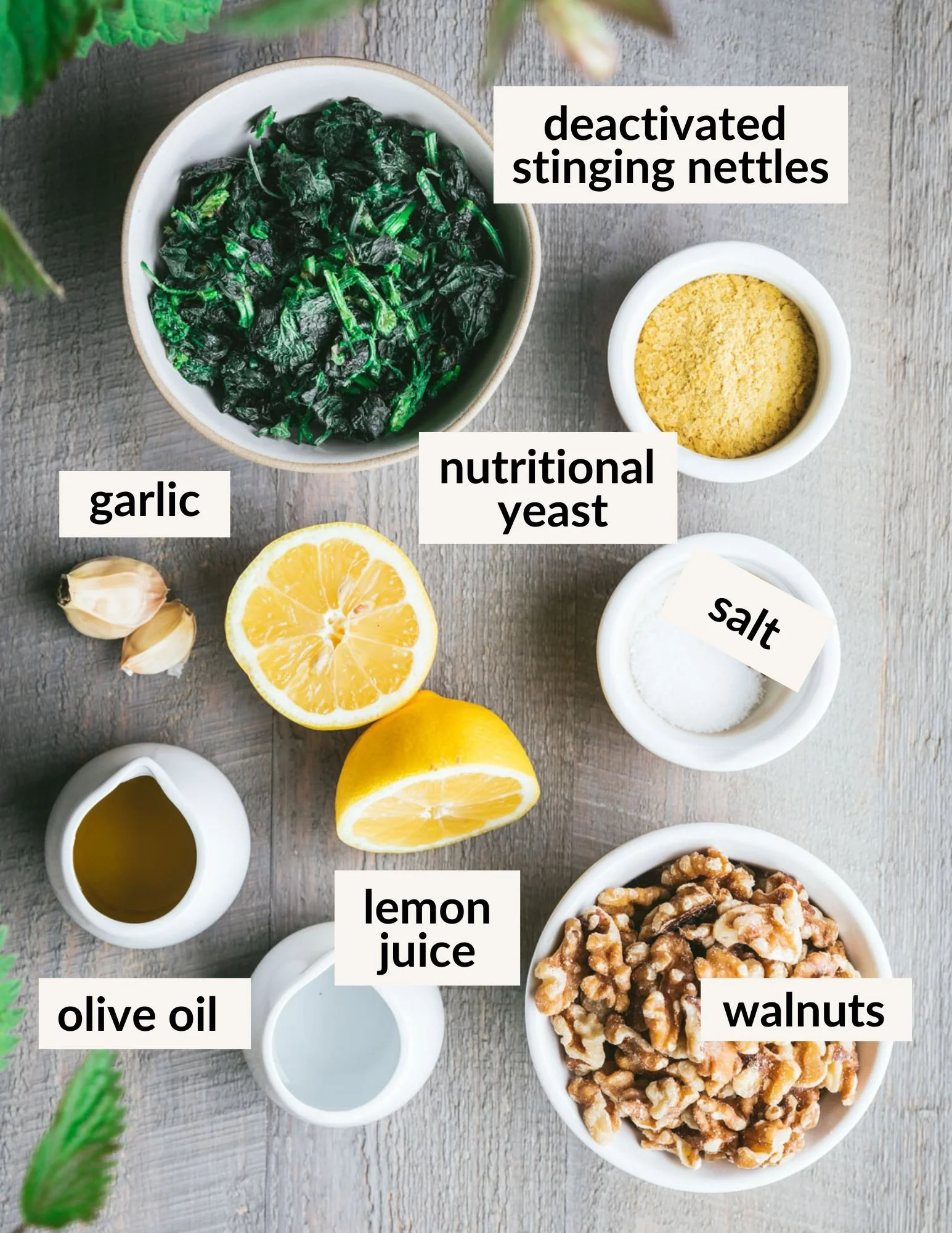
🌿 Stinging nettles- The most economical way to source nettles is to forage for them. (Scroll up to the link above for foraging tips.) You can also find them at your farmer’s market during nettle season.
💦 Water – While this ingredient does not go into the pesto recipe, boiling water is needed to deactivate the stinging nettles, making them safe to eat.
🤎 Walnuts – An economical alternative to pine nuts.
🍋 Lemon juice – Fresh is best! You’ll need 1 large lemon for this recipe.
🧀 Nutritional yeast – This ingredient tastes like parmesan cheese and is what we use to keep this recipe vegan.
🧄 Garlic – Essential for classic pesto flavor.
🫒Olive oil – Choose the best olive oil you can comfortably afford. Its rich flavor ties all of the ingredients together and creates the smooth texture that makes pesto so irresistible.
🥣 How to Make Vegan Stinging Nettle Pesto (with photos)
When you’re ready to make this recipe, scroll down to the recipe card at the end of this post. You’ll find the complete ingredient list with measurements there.
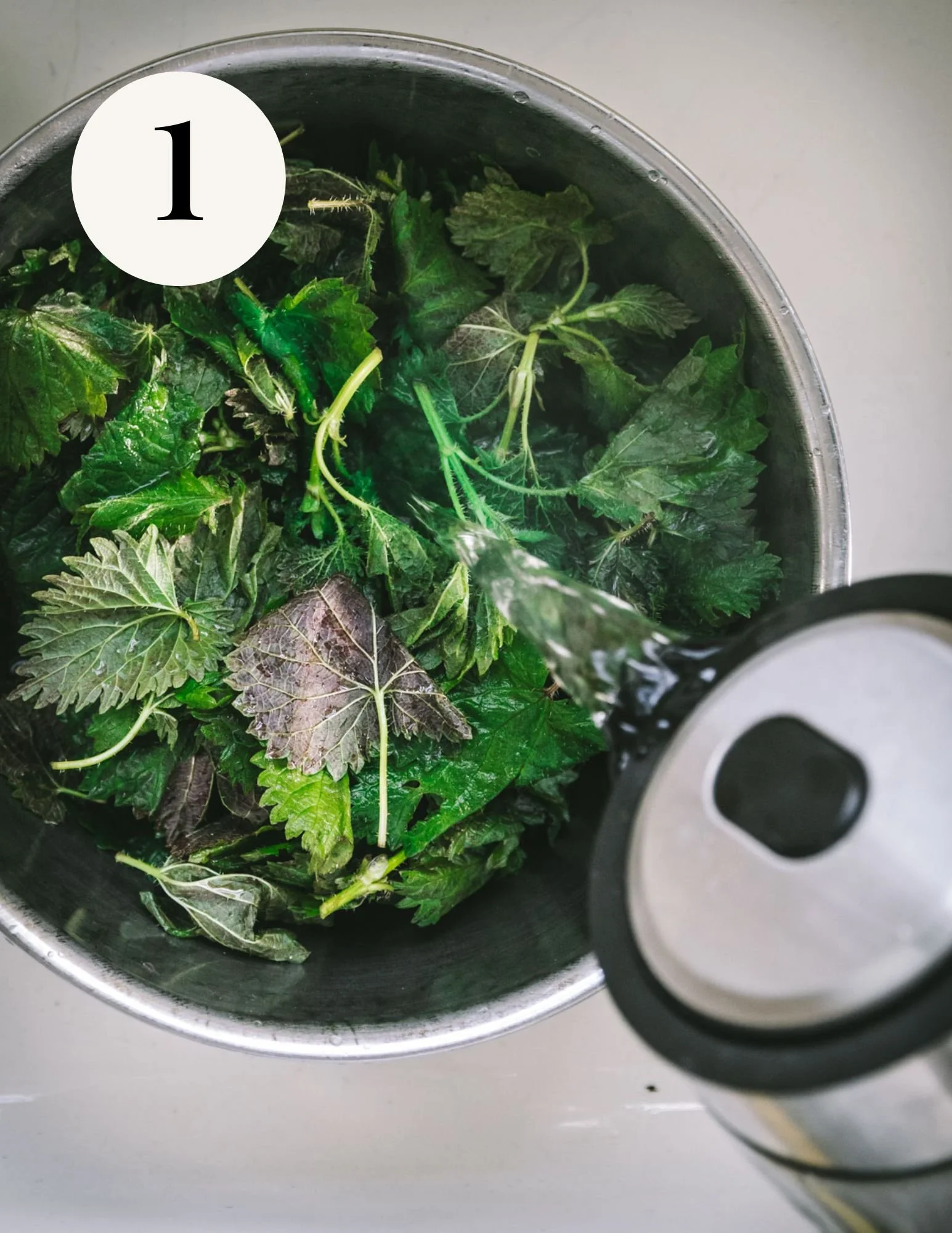
1. Deactivate the stinging nettles – With gloved hands, place the clean nettle leaves in a large bowl. Pour enough boiling water over them so that the stinging nettles are completely submerged. They will immediately wilt and turn dark green. Blanch for 60 seconds, stirring gently. Drain the nettles in a colander and rinse under cold running water until they are cool. With your hands, gather the deactivated nettles into a ball and squeeze all the water out. Roughly chop them and set aside. CHECK OUT THIS HOW-TO VIDEO!
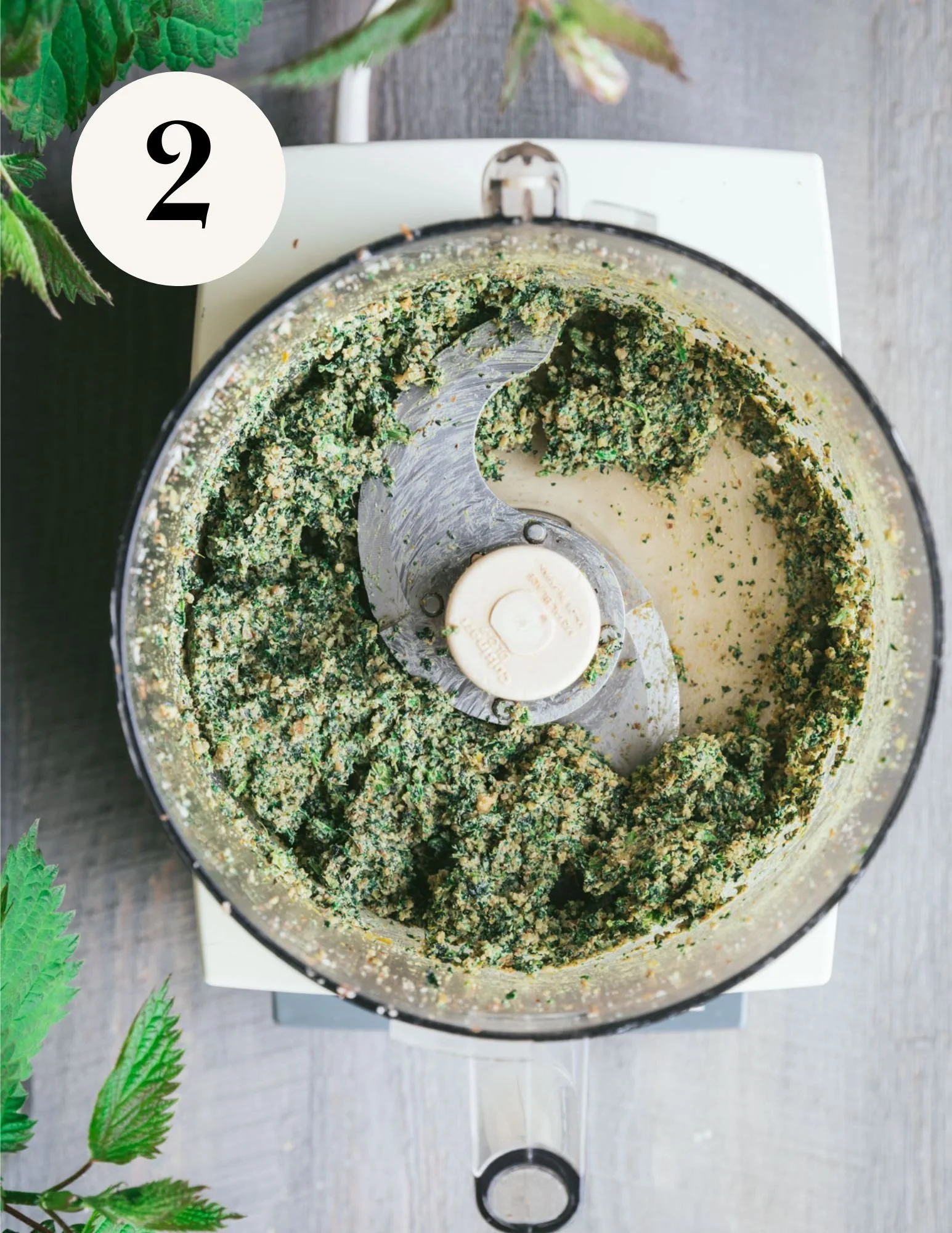
2. Add all the pesto ingredients but the olive oil to the work bowl of a food processor. Blitz until a chunky paste begins to form. Stop and scrape down the sides.
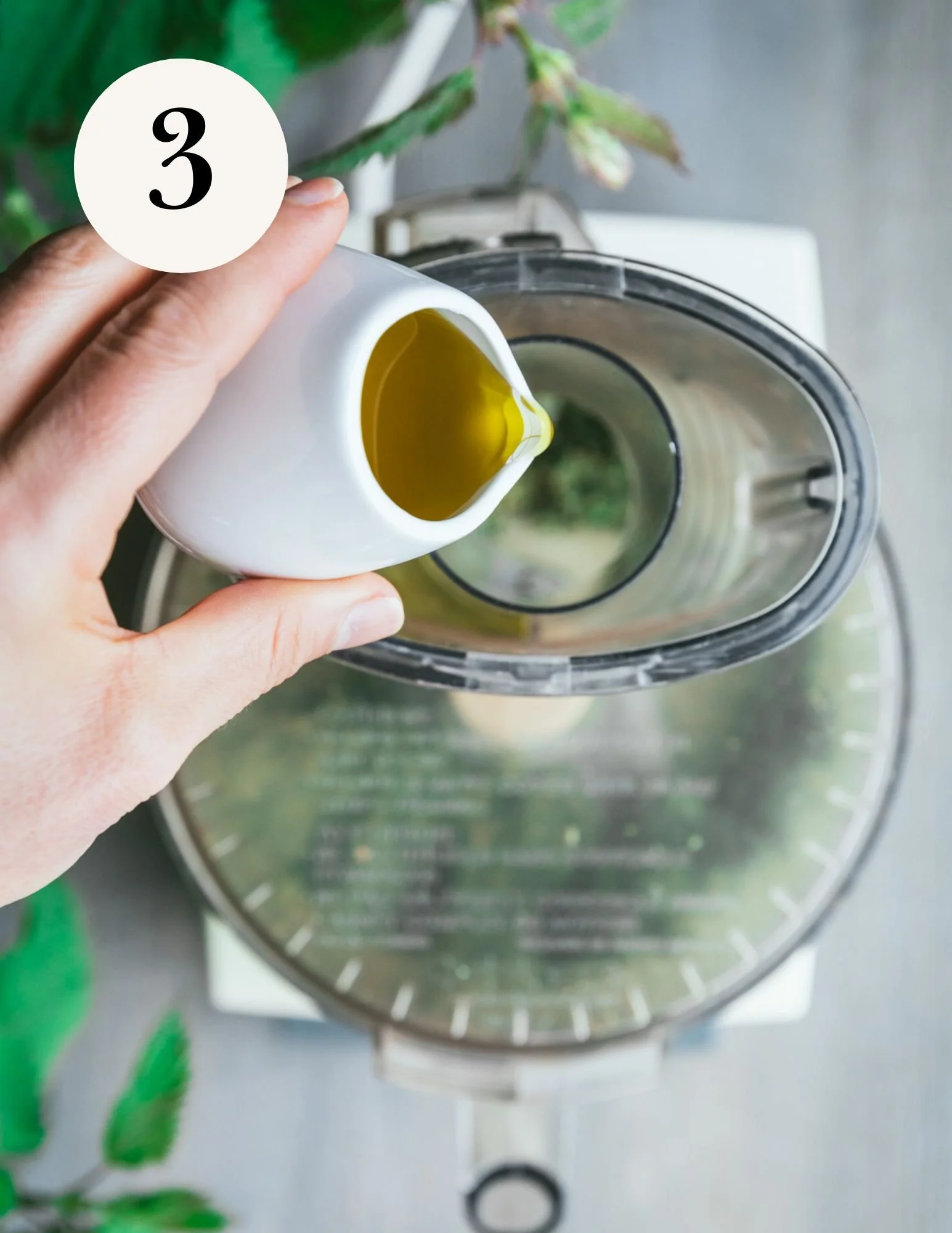
3. With the motor running, slowly pour in the olive oil. You’re looking for a spreadable (not sticky) consistency. Add more oil, if needed, to create a rich, rustic texture.
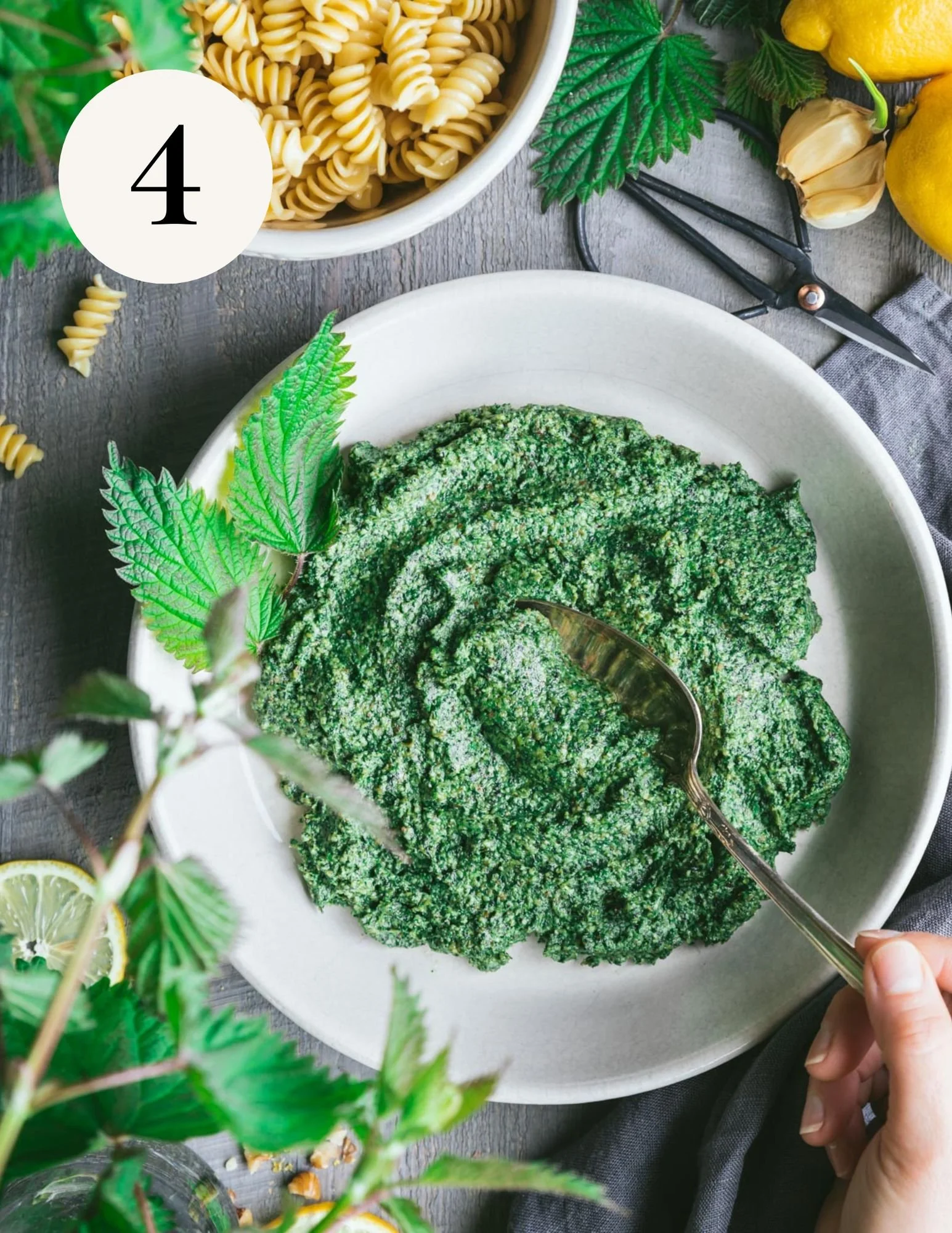
4. Taste and adjust. It should taste bright from the lemon with no bitterness and just the right amount of salty zing. Add more lemon, 1 teaspoon at a time, if the pesto tastes “flat”, a pinch of additional salt if bland, and 1-3 teaspoons more nutritional yeast to balance any bitterness from the walnuts. If you take a bite and then immediately want to eat the whole batch, it’s done!
❄️ Storage
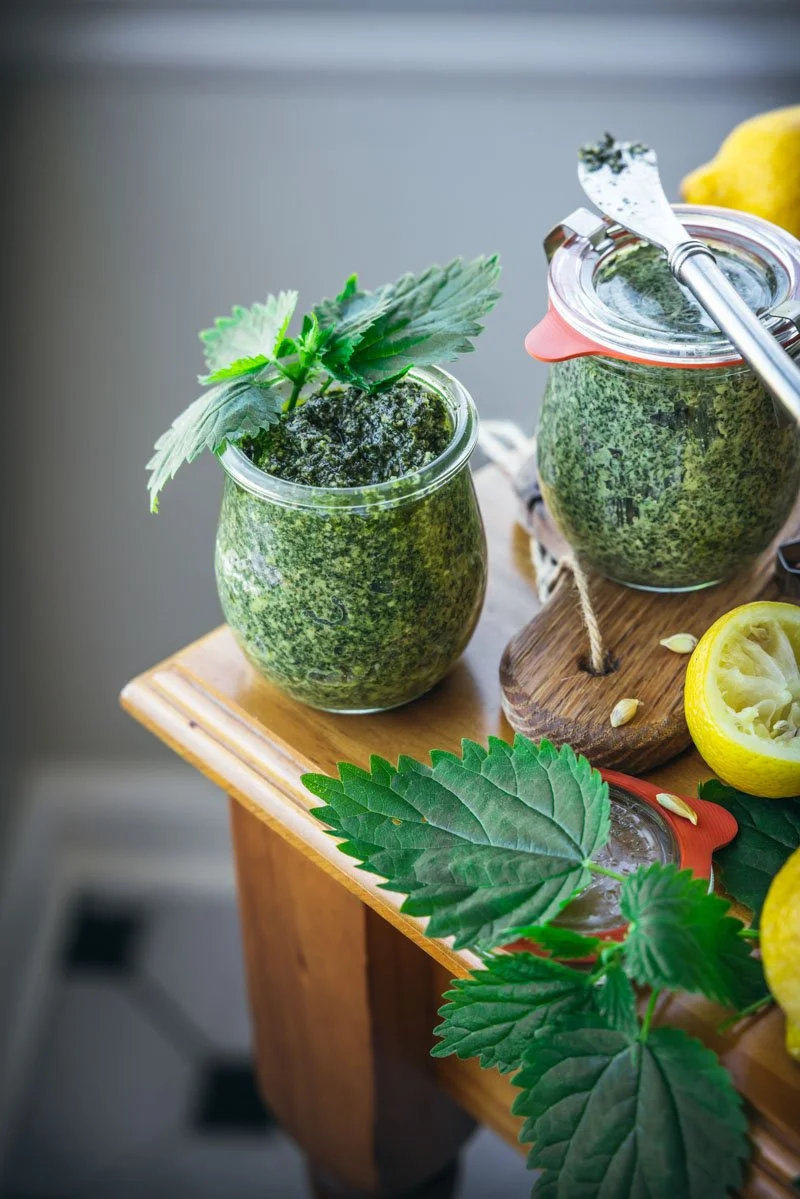
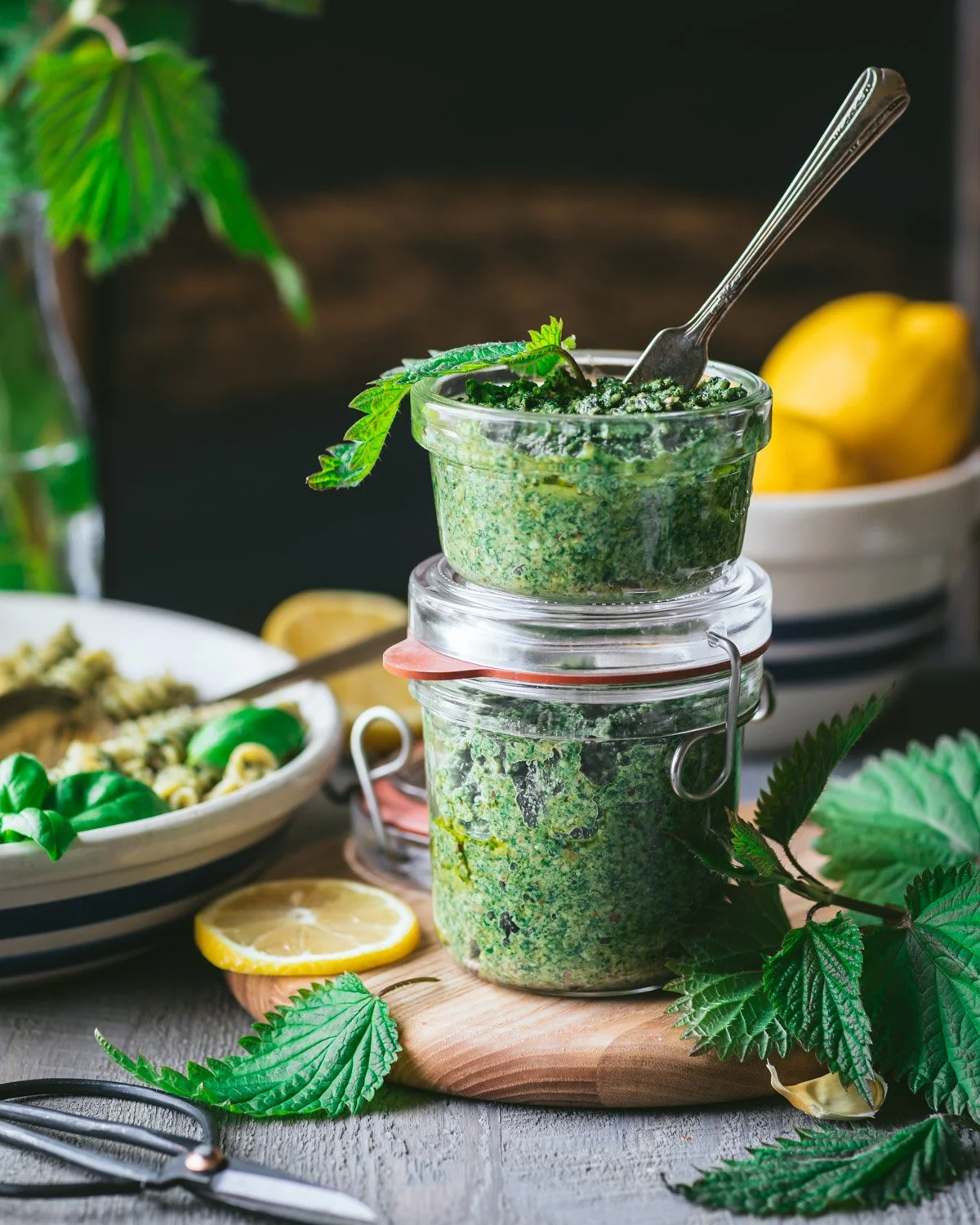
Transfer the pesto into clean glass jars. Pour a little olive oil on the top. This helps reduce oxidation and keeps the pesto from drying out—store with the lid on in the refrigerator for up to 5 days.
Freeze in small airtight containers or ice cube trays, with a little oil on top, for up to 6 months. Thaw in the refrigerator overnight or stir directly into hot pasta, soups, potatoes, or grains.
❗️Common Pesto Mistakes
Pesto is wonderfully forgiving, but a few simple tips can help you achieve the best flavor, texture, and balance every time.
Using tough or damaged stinging nettle leaves – Tender, fresh & healthy nettle leaves produce the best flavor and texture.
Using old walnuts – Old or rancid walnuts can make your pesto taste bitter.
Using too much olive oil all at once – Add olive oil gradually to control consistency.
💚 Serving Suggestions
🌿 Toss with hot pasta for a quick, flavorful meal.
🥣 Swirl into soups just before serving.
🍕 Use as a pizza sauce instead of traditional tomato sauce.
🍳 Dollop onto scrambled tofu.
🥖 Spread on toasted bread or crostini as an appetizer.
🫘Mix into white beans or chickpeas for a quick side dish.
And there you have it! The easiest, most delicious recipe using stinging nettles! I hope you have as much fun foraging for and putting these nutrient-dense leafy greens to good use as I do. It’s so rewarding!
🌿 Let me know how your adventure goes in the comments below!
X,o,

Leave a Comment & Rating
If you like this Instant Vegan Stinging Nettle Pesto recipe, be sure to leave a comment down below as well as a 5-star rating ⭐️⭐️⭐️⭐️⭐️. This helps others find my website, and I absolutely love hearing about your creations!
And be sure to follow along and tag me on Instagram and Pinterest. Thank you SO much for your support!

Vegan Stinging Nettle Pesto / Foraged Food Recipe
Stinging nettles were made for pesto! Blended with olive oil, lemon juice, and walnuts, it tastes remarkably similar to traditional pesto. This recipe is easy, vegan, and created in a food processor.
Ingredients
Instructions
- Deactivate the stinging nettles – With gloved hands, place the clean nettle leaves in a large bowl. Pour enough boiling water over them so that the stinging nettles are completely submerged. They will immediately wilt and turn dark green. Blanch for 60 seconds, stirring gently. Drain the nettles in a colander and rinse under cold running water until they are cool. With your hands, gather the deactivated nettles into a ball and squeeze all the water out. Roughly chop them and set aside. CHECK OUT THIS HOW-TO VIDEO!
- Add all the pesto ingredients but the olive oil to the work bowl of a food processor. Blitz until a chunky paste begins to form. Stop and scrape down the sides.
- With the motor running, slowly pour in the olive oil. You’re looking for a spreadable (not sticky) consistency. Add more oil, if needed, to create a rich, rustic texture.
- Taste and adjust. It should taste bright from the lemon with no bitterness and just the right amount of salty zing. Add more lemon, 1 teaspoon at a time, if the pesto tastes “flat”, a pinch of additional salt if bland, and 1-3 teaspoons more nutritional yeast to balance any bitterness from the walnuts. If you take a bite and then immediately want to eat the whole batch, it’s done!
Notes
The blanched, deactivated stinging nettles will weigh ~65 g after you squeeze all the water out. This is helpful to know when processing a large amount of nettles ahead of time.
❄️ Storage
- Transfer the pesto into clean glass jars. Pour a little olive oil on the top. This helps reduce oxidation and keeps the pesto from drying out—store with the lid on in the refrigerator for up to 5 days.
- Freeze in small airtight containers or ice cube trays, with a little oil on top, for up to 6 months. Thaw in the refrigerator overnight or stir directly into hot pasta, soups, potatoes, or grains.
❗️Common Pesto Mistakes
Pesto is wonderfully forgiving, but a few simple tips can help you achieve the best flavor, texture, and balance every time.
Using tough or damaged stinging nettle leaves – Tender, fresh & healthy nettle leaves produce the best flavor and texture.
Using old walnuts – Old or rancid walnuts can make your pesto taste bitter.
Using too much olive oil all at once – Add olive oil gradually to control consistency.
💚 Serving Suggestions
🌿 Toss with hot pasta for a quick, flavorful meal.
🥣 Swirl into soups just before serving.
🍕 Use as a pizza sauce instead of traditional tomato sauce.
🍳 Dollop onto scrambled tofu.
🥖 Spread on toasted bread or crostini as an appetizer.
🫘Mix into white beans or chickpeas for a quick side dish.
For step-by-step instructions with photos, scroll up to blog post!
Nutrition Facts
Calories
355Fat (grams)
31 gSat. Fat (grams)
4 gCarbs (grams)
15 gFiber (grams)
11 gNet carbs
3 gSugar (grams)
1 gProtein (grams)
8 gSodium (milligrams)
442 mgCholesterol (grams)
0 mgNutritional information is provided as a courtesy and is an estimate only. This information comes from online calculators.


